8 Oct 2026
How to Prepare Baby Bottles Safely: Nairobi Water Guide Kenya
Learn how to prepare baby bottles safely with Nairobi tap water, including water preparation, formula measurements, sterilising bottles and feeding hygiene.
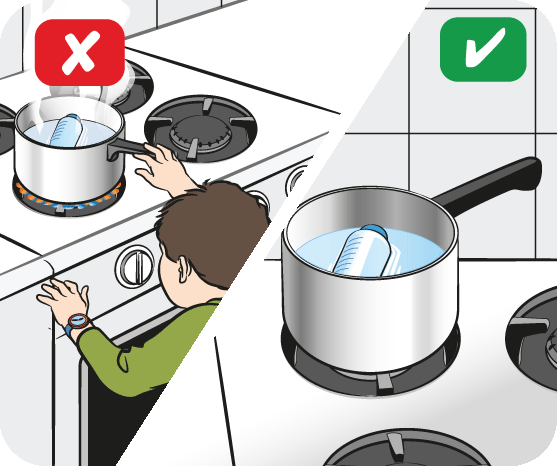
Preparing baby formula safely starts with clean hands, clean bottles, safe water and the correct powder-to-water ratio. If you are using Nairobi tap water, follow the water supplier's current guidance and, where formula instructions require it, use freshly boiled water that has been allowed to cool to the recommended temperature before preparing the feed.
For parents learning how to prepare baby bottle feeds, the most important rule is to follow the formula manufacturer's instructions exactly. Do not add extra powder, dilute the formula or reuse leftover prepared formula.
What You Need Before Preparing a Bottle
Have everything ready before you start:
Clean hands
A clean and sterilised feeding bottle
The correct infant formula
Safe water
The manufacturer's measuring scoop
A clean bottle lid and teat
A clean preparation area
Wash your hands thoroughly with soap and clean running water before handling bottles, formula or feeding equipment.
If the bottle, teat or cap has not been properly cleaned and sterilised, clean it before preparing the feed.
Can You Use Nairobi Tap Water for Baby Formula?
Whether Nairobi tap water is suitable for preparing formula depends on the safety of the water available to your household and current local guidance.
Water can be affected by factors such as:
Where the water comes from
Household storage tanks
Plumbing
Intermittent supply
Contamination after collection or storage
The condition of household pipes
If you are unsure about the safety of your household tap water, seek guidance from your water supplier or a qualified healthcare professional.
For parents using tap water to prepare formula, boiling may be recommended as an additional safety step. Follow both the formula manufacturer's preparation instructions and current public-health advice.
How to Prepare Baby Bottle Safely
The following process provides a practical routine for parents using powdered formula.
1. Wash Your Hands
Wash your hands thoroughly with soap and clean running water.
Pay attention to your fingers, thumbs, palms and areas around the nails.
Dry your hands with a clean towel or allow them to air dry.
2. Clean the Preparation Area
Use a clean surface for preparing the bottle.
Keep the preparation area away from dirty dishes, food waste and other items that could contaminate feeding equipment.
3. Clean and Sterilise the Bottle
Before preparing a feed, make sure the bottle, teat, cap and other reusable feeding equipment have been properly cleaned.
Cleaning removes milk residue and other visible material. Sterilising is the additional process used to reduce microorganisms on the equipment.
This distinction matters when learning how to sterilise bottles Kenya.
4. Prepare Fresh Water
If you are using boiled water, use freshly drawn water rather than water that has been sitting in a kettle or container for a long period.
Bring the water to a full boil.
Do not repeatedly boil the same water throughout the day. Prepare fresh water when needed and follow the formula manufacturer's instructions.
5. Allow the Water to Cool as Directed
This step is important.
Do not automatically mix formula with boiling water unless the product instructions specifically require it.
Similarly, do not guess the temperature based only on how the water feels.
Different formula products may have specific preparation instructions. Follow the directions printed on the formula tin.
If the instructions require boiled water to cool before adding formula, allow it to cool for the specified period.
6. Measure the Water First
Pour the required amount of water into the clean bottle before adding formula powder, unless the manufacturer's instructions state otherwise.
Use the measurement markings on the bottle.
Accurate measurement matters because adding too much or too little water can change the concentration of the prepared feed.
7. Add the Correct Amount of Formula
Use only the scoop supplied with the formula or the measuring method specified by the manufacturer.
Level the scoop according to the instructions.
Do not add extra powder because you think it will make the feed more filling.
Do not reduce the amount of powder to make the formula last longer.
The correct ratio is determined by the manufacturer.
8. Close and Mix the Bottle
Secure the teat and cap properly.
Mix the formula according to the instructions on the tin.
Make sure the powder has dissolved adequately before feeding.
Avoid touching the inside of the teat, cap or bottle with your hands.
9. Check the Temperature
Before feeding your baby, check that the prepared formula is at a suitable temperature.
A small amount can be tested on the inside of your wrist if this is consistent with the product's instructions.
The feed should not be hot enough to burn your baby's mouth.
10. Feed Your Baby Promptly
Prepared formula should be handled according to the manufacturer's storage and use instructions.
Do not leave a prepared feed sitting at room temperature longer than the recommended period.
If your baby starts feeding from the bottle, saliva can enter the bottle and affect how safely the remaining milk can be stored.
Follow the formula manufacturer's guidance for any leftover feed rather than saving it for the next feeding.
How to Sterilise Baby Bottles Without a Steriliser
You do not necessarily need an electric sterilising machine to maintain clean feeding equipment.
Depending on the equipment and manufacturer's instructions, parents may use a suitable method such as boiling.
Boiling Method
First wash the bottle, teat, cap and other feeding equipment thoroughly.
Place equipment in a clean pot of water according to the manufacturer's instructions.
Make sure the equipment is suitable for boiling. Some materials or products may have specific care instructions.
After sterilising, remove the equipment safely and allow it to dry in a clean area.
Do not wipe the inside of the bottle or teat with a kitchen towel because this can reintroduce contamination.
If you are unsure whether a particular bottle or teat can be boiled, check the manufacturer's instructions.
Cleaning and Sterilising Are Not the Same
It is easy to use the terms interchangeably, but they describe different steps.
Cleaning removes milk residue, powder and visible dirt.
Sterilising is an additional step intended to reduce microorganisms on feeding equipment.
A bottle that looks clean is not necessarily ready for feeding.
This is why parents should establish a consistent routine for washing and sterilising bottles, especially when preparing feeds for young babies.
How Often Should Baby Bottles Be Sterilised?
Follow the guidance supplied with your feeding equipment and formula.
You should also consider your baby's age and health circumstances.
Young babies are particularly vulnerable to infections, so careful hygiene is important.
If your baby was premature, has a weakened immune system or has another medical condition, ask your healthcare professional for specific feeding-equipment advice.
What About Bottle Teats?
Bottle teats need careful cleaning because milk can remain around the opening and inside the teat.
After feeding:
Separate the teat from the bottle.
Rinse away milk residue.
Wash it thoroughly.
Check for trapped milk.
Sterilise according to the manufacturer's instructions.
Inspect regularly for damage or deterioration.
Replace damaged, cracked or deteriorating feeding equipment according to the manufacturer's recommendations.
Why You Should Not Add Extra Formula Powder
Adding extra powder does not make formula preparation safer or automatically provide better nutrition.
It can make the prepared feed more concentrated than intended.
Similarly, using too much water can make the feed more diluted than intended.
Always use the exact water and powder measurements specified by the manufacturer.
If you are concerned that your baby is still hungry after feeds, speak with a qualified healthcare professional rather than changing the formula concentration yourself.
What If You Run Out of Boiled Water?
Do not improvise by changing the formula-to-water ratio.
If the preparation instructions require boiled water, prepare it according to those instructions.
It is better to plan your bottle-feeding routine so that you have enough safe water available before preparing feeds.
If you are uncertain about what water is appropriate for your baby's formula, ask your healthcare provider or follow the manufacturer's guidance.
Using Bottled Water for Formula
Bottled water is not automatically the best choice for infant formula simply because it comes in a sealed container.
If you are considering bottled water, check the product information and follow healthcare or manufacturer guidance.
Some bottled waters may have mineral compositions that make them unsuitable for certain uses.
Do not assume that any bottled water can be substituted for the water recommended in your formula preparation instructions.
Storing Prepared Formula
Prepared formula should be handled carefully.
The safest approach is to prepare feeds according to the manufacturer's instructions and use them within the recommended timeframe.
If a prepared feed needs to be stored, follow the manufacturer's instructions for refrigeration and use.
Do not rely on smell or appearance alone to determine whether formula is still safe.
If you are unsure whether a feed has been stored correctly or has been left out too long, it is safer to discard it.
What to Do With Leftover Formula
Do not automatically save leftover formula after your baby has started feeding.
Once your baby has drunk from the bottle, bacteria from the baby's mouth can enter the milk.
Follow the formula manufacturer's instructions for handling unfinished feeds.
Never top up an old bottle with freshly prepared formula.
Instead, clean the bottle and prepare a fresh feed when required.
Common Bottle-Feeding Hygiene Mistakes
Using an unwashed bottle
Even if the bottle looks clean, milk residue can remain inside it.
Guessing measurements
Always use the bottle markings and manufacturer's scoop or instructions.
Adding extra powder
More powder does not mean a better feed and can make the formula too concentrated.
Adding less powder
Diluting formula can also be unsafe.
Reusing leftover formula
Follow the manufacturer's guidance and avoid keeping a feed that has already been partly consumed.
Touching the teat
Avoid touching the inside of the teat or bottle after sterilisation.
Drying sterilised equipment with a used towel
Allow equipment to dry in a clean environment according to the manufacturer's instructions.
Preparing bottles on an unclean surface
Keep the preparation area clean and free from unnecessary items.
A Simple Nairobi Bottle-Preparation Routine
For parents who want a simple routine, use this sequence:
Wash hands → clean preparation area → use a clean and sterilised bottle → prepare safe water → cool according to instructions → measure water → add the correct formula amount → mix → check temperature → feed promptly → clean equipment afterwards.
Keeping the process consistent can reduce mistakes, especially during night feeds when you are tired.
When to Ask for Feeding Advice
Speak to a qualified healthcare professional if you are concerned about:
Your baby's feeding
Frequent vomiting
Poor weight gain
Persistent diarrhoea
Signs of dehydration
Possible formula intolerance or allergy
How much formula your baby should take
Whether you should change formula
How to prepare formula for a premature or medically vulnerable baby
Do not change the concentration of formula or introduce a specialised formula without appropriate advice.
Frequently Asked Questions
Can I use Nairobi tap water to prepare baby formula?
It depends on the safety of the water available to your household and current guidance. If using tap water, follow your water supplier's advice and the formula manufacturer's preparation instructions. If you are unsure about water safety, seek professional guidance.
Should I boil water before preparing baby formula?
If the formula manufacturer's instructions or current public-health guidance recommends boiled water, use freshly boiled water and follow the specified cooling and preparation process.
How do I sterilise bottles without a steriliser?
Depending on the bottle manufacturer's instructions, boiling can be one option. First clean the bottle and feeding equipment thoroughly, then sterilise using a suitable method recommended for that product.
Can I use bottled water instead of Nairobi tap water?
Do not assume that every bottled water product is suitable for infant formula. Check the water and formula manufacturer's guidance and ask a healthcare professional if you are unsure.
Can I keep leftover formula for the next feed?
Do not automatically keep leftover formula, especially after your baby has started drinking from the bottle. Follow the manufacturer's instructions for handling unfinished feeds.
Can I add extra formula powder if my baby seems hungry?
No. Always use the exact powder-to-water ratio provided by the manufacturer. If you are concerned about your baby's feeding or hunger, speak with a qualified healthcare professional.
Final Bottle-Preparation Checklist
Before preparing a feed, make sure you have:
Washed your hands
Cleaned the preparation surface
Cleaned and sterilised the bottle
Used safe water
Followed the water preparation instructions
Measured the water accurately
Added the correct amount of formula
Mixed the feed correctly
Checked the temperature
Followed the recommended storage and use times
Safe bottle feeding is less about having expensive equipment and more about following a consistent hygiene and preparation routine. For families in Nairobi, pay particular attention to the quality and handling of household water, follow the formula manufacturer's instructions and seek professional advice whenever you are unsure.
Shopping for your little one?
Browse the collection