
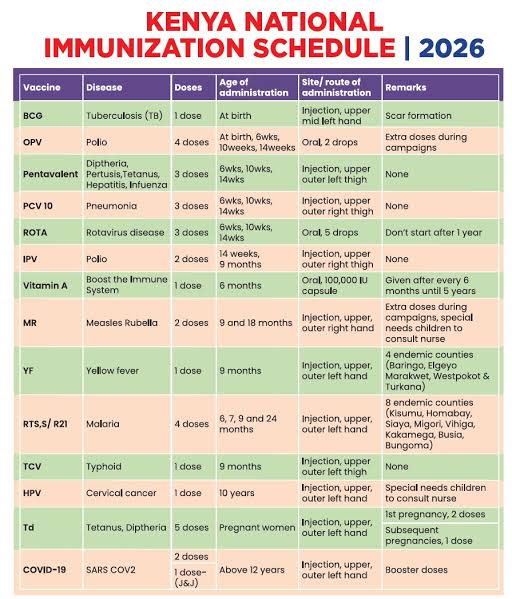
Kenya’s childhood immunisation schedule helps parents know when to take their babies for routine vaccines, from birth through toddlerhood. The Kenya Expanded Programme on Immunization (KEPI) provides vaccinations against serious diseases, including tuberculosis, polio, whooping cough, measles and pneumococcal disease. Keeping clinic appointments helps your child receive protection at the recommended ages.
The schedule below is a practical guide to the routine childhood vaccination timetable reported by Kenya’s Ministry of Health. Vaccine schedules and programme guidance can change, so always check your child’s Mother and Child Health (MCH) booklet and confirm the next visit with a nurse or clinician. Kenya’s Ministry of Health publishes information about the national immunisation programme.
What Is KEPI?
KEPI stands for the Kenya Expanded Programme on Immunization. It is the national programme that supports vaccination services for children and other eligible groups.
Vaccines prepare the immune system to recognise and fight specific infections. Routine childhood immunisation is important because babies can be vulnerable to severe illness from infections that vaccines help prevent. Some vaccines require more than one dose to build or maintain protection.
Vaccinations are commonly provided at public health centres, dispensaries, hospitals and other authorised health facilities. Ask your nearest facility about its clinic days, available vaccines and any updated guidance.
Kenya’s Routine Childhood Immunisation Schedule
The following table summarises key routine childhood vaccination visits. It is a guide rather than a replacement for the schedule recorded by your child’s health worker.
BCG and oral polio birth dose, according to current national guidance
Arrange the first immunisation visit as soon as possible after birth.
6 weeks
First doses of oral polio vaccine, pentavalent vaccine, pneumococcal conjugate vaccine and rotavirus vaccine
This is usually the first major routine vaccination visit after birth.
Second doses of the relevant routine infant vaccines
Return at the recommended interval, even if your baby seemed unsettled after the previous visit.
14 weeks
Further doses of the relevant routine infant vaccines, including polio and pentavalent; IPV is also scheduled in the routine series
Ask the health worker to confirm which doses are due and record them in the booklet.
9 months
Measles-rubella vaccine; yellow fever vaccine may be recommended in designated areas or for particular travel circumstances
Confirm the vaccines recommended for your child’s county and circumstances.
Second measles-rubella dose, according to the routine schedule
Check the booklet and ask whether any other doses or catch-up vaccines are due.
The Ministry of Health’s published schedule and Kenya’s national immunisation guidance should be checked for the latest details, including any new or updated vaccine introductions.
What the main vaccines help protect against
BCG: Helps protect children against severe forms of tuberculosis, particularly serious disease in young children.
Oral polio vaccine (OPV) and inactivated polio vaccine (IPV): Help protect against poliovirus, which can cause paralysis.
Pentavalent vaccine (DTP-HepB-Hib): Combines protection against diphtheria, tetanus, pertussis (whooping cough), hepatitis B and Haemophilus influenzae type b infections.
Pneumococcal conjugate vaccine (PCV): Helps protect against disease caused by pneumococcal bacteria, including some forms of pneumonia and meningitis.
Rotavirus vaccine: Helps protect against rotavirus infection, which can cause severe diarrhoea and dehydration in infants and young children.
Measles-rubella vaccine (MR): Helps protect against measles and rubella.
The exact vaccines and doses given at each appointment should be confirmed by the health worker. Some vaccines are given by injection, while others are administered orally.
How to Keep Track of Your Baby’s Vaccination Dates
It can be difficult to remember appointments while caring for a newborn. A simple routine can help you stay organised.
Keep the MCH booklet safe. Take it to every clinic appointment so the health worker can review previous doses and record new ones.
Check the next date before leaving. Ask the nurse to point out the next appointment date and write it down if needed.
Set a phone reminder. Add the date to your calendar and set a reminder a few days beforehand.
Keep the booklet with important baby documents. This makes it easier to find when travelling or attending a different facility.
Ask questions if anything is unclear. If a vaccine or date is missing from the record, ask the health worker to review the history rather than guessing.
If you are also preparing for your baby’s first clinic visits, a practical newborn clothing checklist can help you organise everyday essentials for outings.
What If Your Baby Misses a Vaccination Appointment?
Missing a vaccination date does not automatically mean your child must start the entire course again. In many cases, a health worker can assess the doses already received and plan catch-up vaccination.
If you miss an appointment:
- Contact or visit your usual MCH clinic as soon as you can.
- Bring the child’s MCH booklet or any available vaccination records.
- Tell the health worker which doses your child has received, if you know.
- Ask for a catch-up plan and make sure the next appointment is recorded.
Do not assume that your child is too old to receive a missed vaccine, and do not try to calculate a replacement schedule yourself. The right plan depends on the child’s age, previous doses, the intervals between vaccines and current national guidance. The World Health Organization provides guidance on interrupted or delayed vaccination, but your child’s health worker should apply the appropriate Kenyan schedule.
Are Mild Reactions After Vaccination Normal?
Some children experience temporary reactions after vaccination, such as soreness or swelling where an injection was given, mild fever, irritability or being sleepier than usual. These reactions often settle without special treatment.
After the appointment:
- Follow the health worker’s advice on comfort and care.
- Offer breast milk or the child’s usual feeds as appropriate.
- Monitor your baby and ask the clinic what reactions are expected for the vaccines given.
- Do not give medicines to a baby unless you have appropriate advice on the medicine and dose.
Seek urgent medical attention if your child has difficulty breathing, swelling of the face or throat, becomes unresponsive, has a seizure, or develops other severe or worrying symptoms. If you are concerned about a reaction, contact a healthcare professional rather than relying on online advice.
What Should You Bring to an Immunisation Visit?
Before leaving home, check that you have:
- Your child’s MCH booklet or vaccination record.
- Any clinic card or referral note you have been given.
- Your child’s usual supplies, such as nappies, wipes, a change of clothes and feeding essentials.
- A list of questions about previous reactions, missed doses or upcoming appointments.
You can prepare these essentials alongside your hospital bag checklist for Kenyan mums, especially if you are planning ahead for delivery and the first days after birth.
Does Every Child Receive Exactly the Same Schedule?
Not always. The routine national schedule provides the standard pathway, but a clinician may need to assess a child’s circumstances, including previous vaccination history, certain health conditions, travel plans or residence in an area where an additional vaccine is recommended.
For example, yellow fever vaccination may be recommended for eligible children in designated endemic counties or in particular travel situations. Ask your local health facility for advice specific to your county and destination.
The national programme can also change as new vaccines are introduced or recommendations are updated. For this reason, avoid relying only on an old poster, a social media image or another child’s booklet. Confirm current recommendations with a qualified health worker.
Frequently Asked Questions
When should my baby receive the first KEPI vaccines?
Routine vaccination begins at birth or the first contact with a health facility, with subsequent routine visits commonly scheduled at 6, 10 and 14 weeks. Check your child’s MCH booklet and confirm the dates with your health worker.
What happens if I am late for my baby’s vaccines?
Visit your MCH clinic as soon as possible and bring the vaccination record. A health worker can assess which doses are due and advise on a catch-up schedule. Do not restart or skip doses without professional guidance.
Are childhood vaccines in Kenya free?
Routine vaccines are provided through public immunisation services, but availability and charges for related services can vary by facility and circumstance. Ask your nearest public health facility what is available and whether any fees apply.
Can my baby be vaccinated if they have a mild illness?
It depends on the illness and the vaccine. Tell the health worker about your child’s symptoms and any medicines being taken so they can assess whether to vaccinate that day or advise a different date.
Where can I check my child’s next vaccination date?
Start with the date recorded in the MCH booklet and confirm it with your child’s clinic. Kenya’s Ministry of Health also provides digital vaccination services through its self-service portal, including access to the Chanjo Portal for relevant vaccination services.
Should I keep the MCH booklet after my child finishes the infant schedule?
Yes. Keep it as part of your child’s health record and take it to future clinic visits. It helps healthcare workers review previous vaccinations and determine whether additional doses are needed.
Help Your Child Stay on Schedule
The most useful step parents can take is to keep the MCH booklet up to date, attend routine visits and contact the clinic promptly after a missed appointment. If the booklet is lost or the record is incomplete, ask the health facility how to reconstruct the vaccination history.
Use this article as a general guide, not as an individual medical schedule. Your child’s health worker and the latest Ministry of Health guidance are the best sources for confirming which vaccines are due and when.