6 Oct 2026
Diaper Size Chart: Matching Nappy Size to Your Baby by Weight
Use this diaper size chart to match nappy size to your baby's weight, identify signs it is time to size up, and understand daily nappy needs.
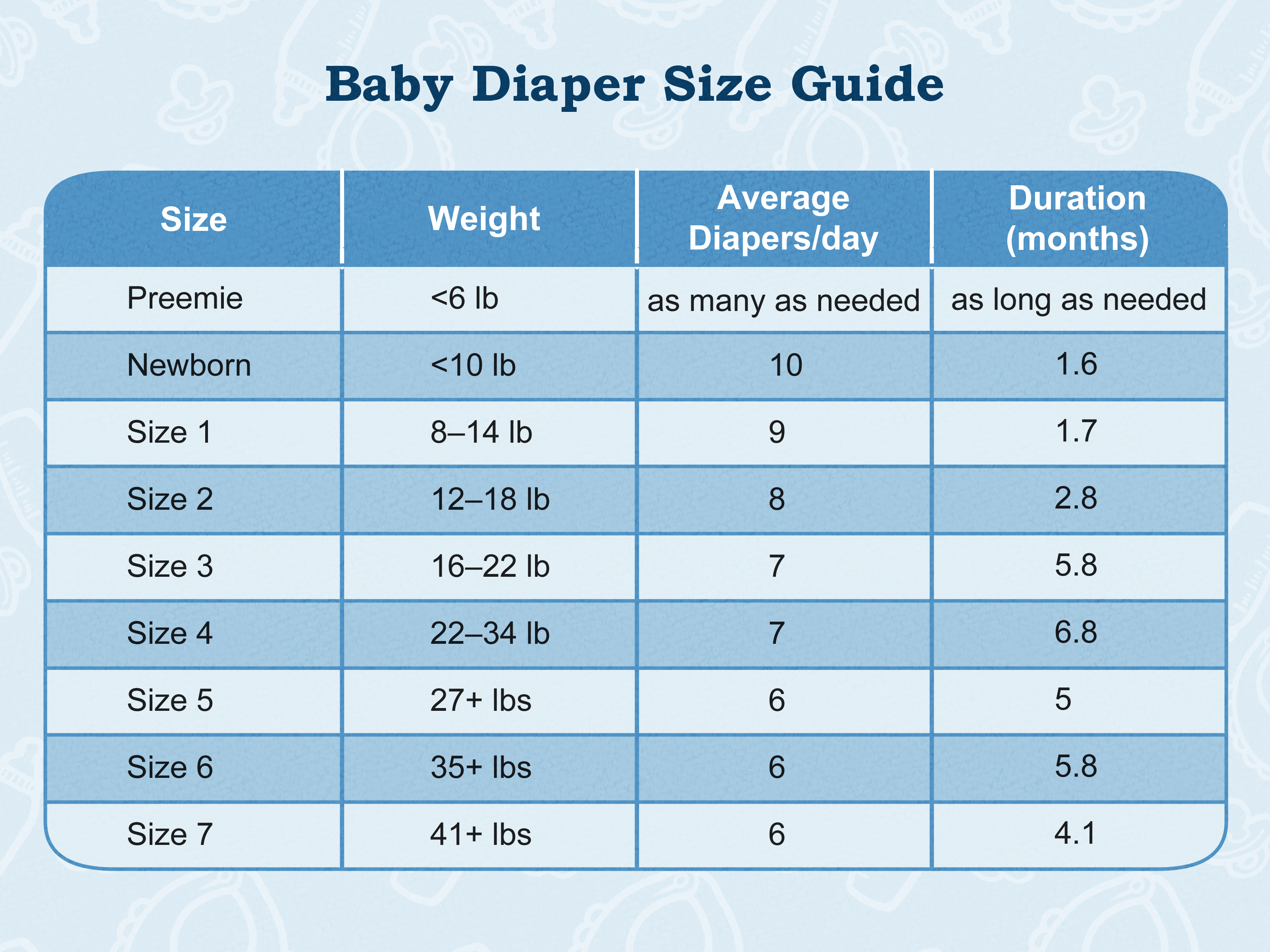
Choosing the right nappy size is mainly about your baby's weight, fit and comfort. A diaper size chart can help you identify the appropriate starting size, but weight ranges vary between brands, so always check the manufacturer's size guide before buying in bulk.
Diaper Size Chart by Baby Weight
Use the table below as a general reference rather than a universal sizing standard.
Nappy size Typical weight range General stage
Newborn Brand-specific Newborn
Small Brand-specific Early months
Medium Brand-specific Growing baby
Large Brand-specific Older baby
Extra Large Brand-specific Toddler stage
Important: Baby nappy sizes are not standardised across every brand. The exact weight range printed on the pack should always take priority over a general diaper size chart.
Why Baby Weight Matters More Than Age
Nappy sizing is usually based more closely on weight than age because babies grow at different rates.
Two babies of the same age may need different nappy sizes. One may still fit comfortably into a smaller size while another may already need the next size.
For this reason, use your baby's current weight and the specific manufacturer's size range when choosing nappies.
How Do You Know Which Nappy Size to Buy?
Start by checking the weight range printed on the nappy packaging. Then consider how the current nappy fits around your baby's waist, thighs and bottom.
A nappy may be too small if:
It leaves deep or persistent marks around the legs or waist.
The fastening tabs are difficult to position comfortably.
The nappy looks too tight around your baby's body.
Leaks are becoming more frequent despite correct fitting.
Your baby's bottom is no longer adequately covered.
A nappy may be too large if:
There are noticeable gaps around the legs.
The nappy moves around excessively.
It is difficult to position securely.
Leakage occurs because the fit is loose rather than because the nappy is full.
When Should You Size Up?
There is no single age at which every baby should move to the next nappy size.
Instead, look at the combination of weight and fit.
If your baby is approaching the upper end of the manufacturer's recommended weight range and the current nappy feels tight, it may be time to try the next size.
You can also compare the fit of the next size before buying a large pack.
Signs It Is Time to Move Up
Common signs include:
Frequent leaks: If the nappy is being fitted correctly but leaks are becoming more common, consider whether your baby has outgrown the current size.
Red marks: Some temporary marks can occur, but persistent deep marks around the waist or legs may indicate that the nappy is too tight.
Difficulty fastening: If the tabs no longer reach a comfortable position, the current size may be too small.
Poor coverage: Your baby's bottom should be adequately covered. If the nappy looks noticeably small, try the next size.
Weight near the upper limit: If your baby is close to or above the manufacturer's upper weight recommendation, check the next size.
How Many Diapers Does a Baby Need Per Day?
The number of nappies a baby uses each day varies with age, feeding, bowel movements and individual routines.
Newborns generally require frequent nappy changes, while older babies may go longer between changes.
Rather than relying on one fixed number, parents should watch the baby and change the nappy when it is wet or soiled.
For budgeting purposes, it is useful to estimate your household's actual usage after observing your baby's routine for several days.
Why You Should Not Buy Too Many Nappies in One Size
Babies can move through nappy sizes quickly, particularly during periods of rapid growth.
Buying several large packs before you know how quickly your baby will move between sizes can result in unused nappies.
This is especially important when trying a new brand. Buy a smaller quantity first, check the fit and then purchase more if the size works well for your baby.
Nappy Size by Weight vs Age
Weight is generally a more useful starting point than age.
Factor Usefulness when choosing size
Baby's weight Primary reference
Manufacturer's size chart Essential
Baby's age General context
Waist fit Important
Leg fit Important
Leakage Useful fitting signal
Red marks Useful fitting signal
A six-month-old baby does not automatically need the same nappy size as every other six-month-old baby.
How Should a Nappy Fit?
A correctly fitted nappy should sit securely without being excessively tight.
Check three areas:
Around the waist
The nappy should sit securely against the baby's body without causing uncomfortable pressure.
Around the legs
The leg openings should provide a secure fit without leaving excessive gaps. At the same time, they should not be painfully tight.
Around the bottom
The nappy should provide sufficient coverage. If the baby's bottom is only partly covered, consider whether the size is too small.
After putting on the nappy, check that the clothing is not compressing it excessively.
What If Your Baby Is Between Two Nappy Sizes?
Being between sizes is common.
If your baby is within the recommended weight range for both sizes, compare the fit rather than choosing solely by age.
You may prefer the smaller size if it provides comfortable coverage without leaks or tightness. If the smaller size is becoming difficult to fasten or leaving persistent marks, try the larger size.
When buying nappies online, check the weight range on the product listing or packaging before ordering.
Newborn Nappy Sizes
Newborn nappies are designed for very small babies, but not every newborn will remain in that size for long.
Some babies may move into the next size relatively quickly, while others may use newborn nappies for longer.
Avoid buying excessive quantities before you know your baby's growth pattern and how well the particular brand fits.
If you are also preparing your baby's first wardrobe, our Newborn Clothing Checklist Kenya can help you plan the clothing you actually need.
Choosing Nappies for Your Baby in Kenya
Parents in Kenya may find nappies in supermarkets, pharmacies, baby shops and online stores.
When comparing options, consider:
The baby's current weight
The manufacturer's size range
Pack quantity
Cost per nappy
Fit around the waist and legs
Your baby's experience with the product
Availability of your preferred size
A larger pack is not necessarily better value if your baby is close to moving to the next size.
Calculate Cost Per Nappy
When comparing prices, divide the pack price by the number of nappies inside.
For example:
Pack price ÷ number of nappies = cost per nappy
This gives you a more useful comparison than looking only at the total pack price.
How to Avoid Nappy Leaks
Nappy leaks do not always mean that you need a larger size.
Before changing size, check that:
The nappy is positioned correctly.
The leg gathers are pulled out properly.
The fastening tabs are secure.
The nappy is changed regularly.
The nappy is not already too small or too large.
If these checks do not solve the problem, try another size or consider whether a different nappy design may fit your baby better.
Diaper Size Chart: Key Takeaways
The best nappy size is the one that matches your baby's current weight and provides a comfortable, secure fit.
Remember these points:
Check the manufacturer's weight range.
Do not choose a size based on age alone.
Look for persistent tightness or poor coverage.
Consider sizing up when your baby approaches the upper weight limit.
Do not buy excessive quantities of an unfamiliar size.
Compare cost per nappy when shopping.
Check the fit around the waist, legs and bottom.
Change nappies regularly according to your baby's needs.
Frequently Asked Questions
How do I know what nappy size my baby needs?
Check your baby's current weight against the manufacturer's size chart. Then assess the fit around the waist, legs and bottom.
Should nappy size be based on age or weight?
Weight is generally the better starting point because babies of the same age can have very different body sizes. Always check the manufacturer's recommended weight range.
When should I move my baby up a nappy size?
Consider sizing up when your baby reaches the upper end of the recommended weight range or when the current nappy becomes tight, difficult to fasten or provides poor coverage.
Can the wrong nappy size cause leaks?
Yes. A nappy that is too small can provide insufficient coverage, while one that is too large can leave gaps around the legs. Correct positioning and regular changing also matter.
How many nappies does a baby use per day?
Daily nappy use varies by age and the individual baby. Newborns typically require frequent changes, while older babies may use fewer nappies each day.
Should I buy nappies in bulk?
It is better to buy cautiously when trying a new size or brand. Babies can outgrow sizes quickly, so confirm the fit before purchasing large quantities.
Shopping for your little one?
Browse the collection