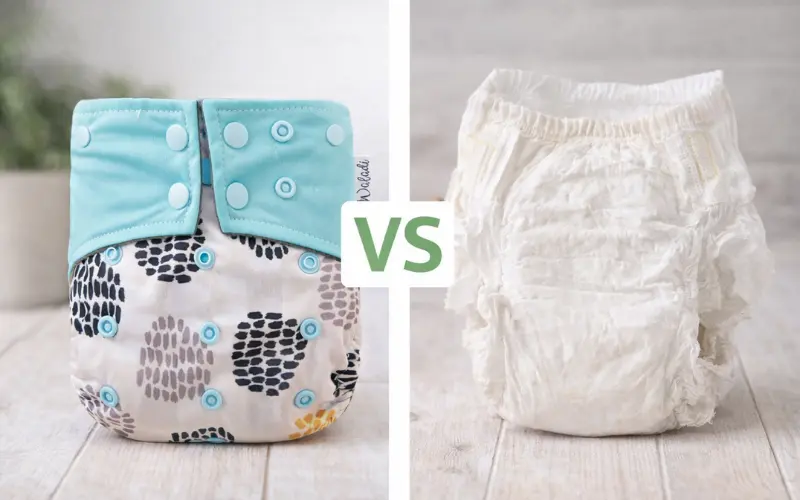
Cloth nappies can be more economical for families who have reliable water, enough drying space and time to manage laundry. Disposable nappies are often more convenient, particularly for working parents, travel and households where washing and drying are difficult. Neither option is automatically cheaper for every family.
The fairest comparison includes the cost of buying nappies, water, detergent, electricity where applicable, replacement items and the time needed to wash and dry reusable nappies. It should also account for how often your baby needs changing and whether you use cloth full-time or combine it with disposables.
How Cloth Nappies and Disposable Nappies Differ
Cloth nappies
Reusable cloth nappies are washed after use and worn again. Depending on the design, they may have absorbent inserts, waterproof outer covers or a simple cloth-and-fastener arrangement.
Common options include:
- Flat cloth nappies: Simple fabric squares that are folded and secured, often with a suitable waterproof cover.
- Prefolds: Rectangular absorbent cloths with extra layers in the centre.
- Pocket nappies: Waterproof outer shells with removable absorbent inserts.
- All-in-one nappies: Designs that combine the absorbent layers and outer cover in one piece.
Cloth nappies require an upfront investment. You also need enough clean nappies to cover changes while used ones are being washed and dried. A smaller collection may work if you wash frequently, but it can become inconvenient when drying takes longer.
Disposable nappies
Disposable nappies are designed for one use and are discarded after changing. You buy them repeatedly, so the cost continues for as long as your child needs them.
Their main advantage is convenience. There is no nappy laundry, and they can be practical for childcare, overnight use, outings and travel.
The price varies by brand, size, pack count and retailer. For example, Kenyan retail listings have shown some 64-count packs around KSh 1,199 and some 44-count packs around KSh 849. These are examples from online listings, not guaranteed prices or a complete survey of the market. Check current prices before budgeting. (Kenyan disposable nappy price comparisons)
The Upfront Cost of Reusable Nappies
The first expense is building a collection large enough to cover your baby's daily changes while other nappies are being washed and dried.
Your starter budget may need to include:
Item
May be necessary when drying is slow or laundry is infrequent
Prices vary considerably depending on the material, design, quality and quantity purchased. Kenyan marketplace listings include small reusable sets, individual nappies and larger bundles, so compare what each package actually contains rather than comparing headline prices alone. See reusable nappy listings on Jumia Kenya.
A low-cost set may not include enough nappies for full-time use. Check the number of nappies and inserts, the size range, the expected fit and whether additional covers are required.
The Ongoing Cost of Cloth Nappies
Reusable nappies are not free to use after purchase. Washing and drying create recurring costs that depend on your household.
Water
You may use additional water for rinsing and washing. The cost depends on your water supply, local tariff, washing method and the number of loads needed.
If you rely on purchased water or have an irregular supply, the cost and effort can be significantly higher than in a home with reliable piped water.
Detergent and laundry products
You will need a detergent suitable for washing the nappy materials. Follow the manufacturer's washing instructions, use an appropriate amount of detergent and rinse thoroughly as directed.
Fabric softeners and other laundry additives may affect absorbency or leave residues, so use them only if the nappy manufacturer says they are suitable.
Electricity
If you use a washing machine, include the extra electricity cost where it applies. Handwashing avoids machine electricity but requires physical effort and time.
Drying and replacement
Cloth nappies need to dry thoroughly before reuse. During rainy weather or in homes with limited outdoor space, drying may take longer. You may need a larger collection to maintain a reliable rotation.
Nappies, elastic, fasteners and waterproof layers can also wear out. Include possible replacements in a longer-term budget rather than assuming the original set will last indefinitely.
Disposable Nappies: Calculating the Cost in Kenya
The easiest way to estimate disposable nappy costs is to calculate the price per nappy and multiply it by your average daily use.
Cost per nappy = pack price ÷ number of nappies in the pack
For example, using the illustrative online prices mentioned earlier:
Example pack
KSh 19.30
These are examples of listed products, not a recommendation for a particular brand. Prices, promotions and available pack sizes can change.
Your baby's nappy size may also change over time. Some sizes cost more per nappy, and different brands have different pack counts, so recalculate your average cost when you change products.
How much could disposables cost over two years?
The following table uses an illustrative cost of KSh 19 per disposable nappy. It shows how much the total changes with the number of changes per day.
KSh 110,960
The calculation uses 730 days for two years. Actual usage varies with age, toilet-training progress, nappy changes and your child's needs. The figures exclude wipes, disposal bags, rash products and any nappies used after the two-year period.
This is why the disposable option can become a substantial recurring expense even when each individual nappy seems affordable.
An Honest Two-Year Cost Comparison
Let's compare the options using an example budget. The purpose is to show how to do the maths—not to claim that every family will spend these amounts.
Assume a family uses six disposable nappies per day at KSh 19 each. The estimated two-year disposable cost is KSh 83,220.
Now assume a family buys a reusable nappy collection and related supplies for KSh 15,000, then spends an estimated KSh 500 per month on additional water, detergent and other laundry-related running costs. Over 24 months, the illustrative cloth cost is KSh 27,000.
Replacements, extra supplies and other items
In this example, the difference is KSh 56,220 in favour of cloth nappies before valuing the time spent washing and drying them. But this result depends on the assumptions.
If your cloth setup costs more, your water is expensive, you need additional nappies or you use disposables for part of the day, the gap narrows. If you find a lower disposable cost per nappy, use cloth for longer or reuse the set for another child, the comparison changes again.
The KSh 500 monthly laundry allowance is an example figure, not a measured Kenyan household average. Replace it with your own water, detergent and electricity costs for a more meaningful estimate.
Don't Ignore the Cost of Time
A cost comparison based only on receipts can make cloth nappies look simpler than they are. Someone has to rinse or prepare used nappies as appropriate, wash them, manage the laundry and ensure they dry thoroughly before reuse.
Ask yourself:
Who will wash the nappies?
Will your childcare provider accept cloth nappies?
Can you manage the routine when you return to work or when your baby is unwell?
If you handwash nappies, your time and effort may be a substantial part of the real cost. If you already run regular washing-machine loads and can dry nappies easily, the extra workload may feel more manageable.
There is no single correct way to value that time. The important thing is to include it in your decision rather than assuming it is free.
Water, Washing and Hygiene
Cloth nappies need to be washed properly and dried thoroughly before reuse. A quick rinse alone is not an adequate cleaning routine.
Follow the nappy manufacturer's instructions for handling, washing, rinsing and drying. Wash soiled nappies hygienically, keep used nappies separate from clean ones, and wash your hands after handling them.
Consider your home conditions as well. In areas where water is intermittent, washing cloth nappies may require additional water storage or purchased supplies. During rainy periods, limited drying space can slow the rotation and make a larger nappy collection necessary.
For these reasons, cloth nappies may be more practical for one household than another, even when both families buy the same products. A Kenya-focused comparison from NipNap on cloth and disposable nappy costs also highlights the importance of water access, drying and laundry time.
Is a Hybrid Approach Worth Considering?
You do not have to choose one option for every nappy change. A hybrid routine can combine reusable nappies at home with disposables when washing or drying is impractical.
For example, you could use cloth during the day when you are at home and keep disposables for travel, childcare or periods when your usual laundry routine is disrupted.
A hybrid approach can be useful if you want to reduce disposable purchases without committing to full-time cloth use. However, the financial result depends on how often you use each option and whether you still need a full cloth collection.
Track your disposable purchases and laundry costs for a month or two. That gives you a more realistic basis for deciding whether the mixed routine is working for your family.
Which Option Is Better for Your Household?
There is no universal winner. The best option is the one that fits your budget, time, water access and daily routine while keeping your baby clean and comfortable.
Cloth may spread the initial cost across more use
Whichever option you choose, change nappies when needed, clean your baby's skin gently and use products that suit your child. If you notice persistent irritation or a rash that worsens, seek medical advice.
Are cloth nappies cheaper than disposables in Kenya?
They can be, particularly when you use them regularly and have affordable, reliable laundry facilities. However, the upfront cost, water, detergent, electricity, drying conditions and time all affect the final saving. Calculate your own costs rather than relying on a universal estimate.
How many reusable nappies do I need?
The number depends on how often you change your baby, how frequently you wash and how quickly nappies dry. A smaller collection requires more frequent washing, while a larger collection provides more flexibility. Check the product's recommended use and plan around your actual routine.
Do cloth nappies use a lot of water?
They require water for washing and rinsing, but the amount depends on the washing method, load size and product. If you pay for water by the container or have an irregular supply, include that expense in your calculation.
Are disposable nappies more convenient?
For many families, yes. They do not require nappy laundry and can be easier for outings, travel and childcare. Convenience still depends on affordability, product fit, absorbency and how readily you can buy the size you need.
Can I use cloth nappies during the day and disposables at night?
Some families use this combination. Choose a suitable nappy for the time and your baby's needs, change it when necessary and check the fit and skin regularly. Include both the cloth laundry costs and disposable purchases in your budget.
Do reusable nappies save money if I have another baby?
They may, if the nappies remain in good condition, fit the next child and can be cleaned and stored properly. You may still need replacement inserts, covers or fasteners, and different sizes depending on the product.
Make the Choice Using Your Own Numbers
Cloth nappies can reduce repeated purchases, while disposables can save laundry time and make daily care easier. The honest answer comes from comparing the full cost over the period your child needs nappies, including water, detergent, electricity, drying, replacements and your time.
Start by checking the current price per disposable nappy, estimating how many you use daily and getting a realistic quote for a reusable collection. Then estimate the monthly laundry cost using your own household expenses. If neither option is ideal on its own, consider a hybrid routine and review the costs after a month.
The aim is not to prove that cloth or disposables are always better. It is to choose a nappy routine that is affordable, hygienic and manageable for your family.