30 Sep 2026
Baby Clothing Size Guide Kenya: Age-to-Size Chart and How to Measure
Learn how to choose the right baby and toddler clothing size in Kenya with an age-to-size chart, simple measuring tips, and guidance on when to size up.
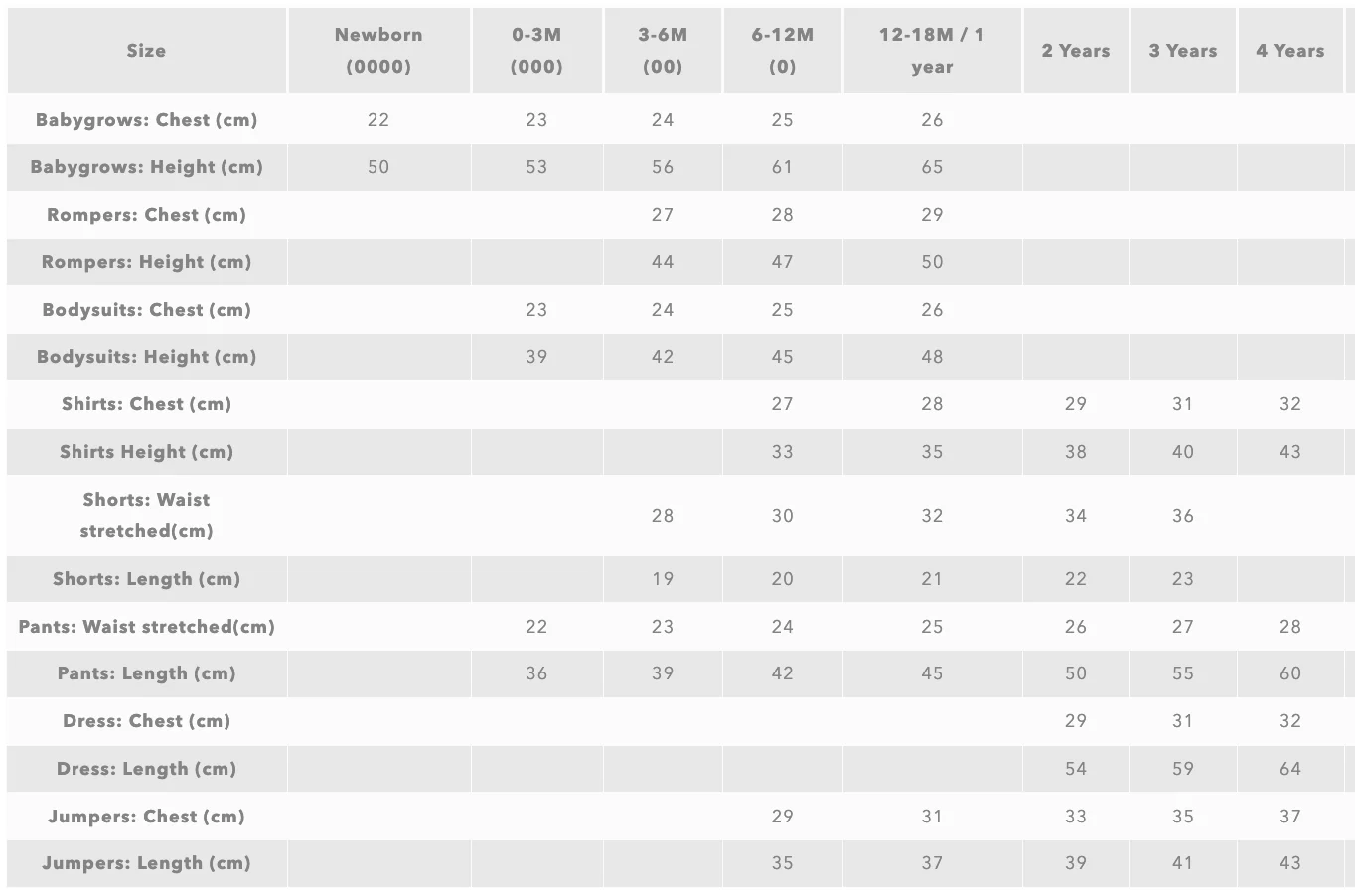
Choosing the right baby clothes size is easier when you use your child’s measurements alongside their age. An age-to-size chart is a useful starting point, but babies and toddlers grow at different rates, so height, weight and body measurements can give you a better indication of the size to choose.
This baby clothes size guide Kenya explains common baby and toddler clothing sizes, how to measure your child at home, and when it makes sense to size up.
Baby clothing sizes by age
Baby clothing is commonly labelled by age, such as newborn, 0–3 months, 3–6 months and 6–12 months. However, these labels are not universal measurements. A 6-month-old baby may need a different size from another baby of the same age.
Use the following chart as a general starting point, then compare your child's measurements with the measurements supplied for the particular garment or brand.
Approximate age Common clothing label What to consider
Newborn Newborn / NB Best suited to very young or smaller babies; avoid buying too many before birth because babies vary considerably in size
0–3 months 0–3M Consider baby's height and build as well as age
3–6 months 3–6M Allow room for growth, especially for everyday outfits
6–9 months 6–9M Check length and fit around the chest and waist
9–12 months 9–12M Consider whether your baby is growing quickly or is already close to the next size
12–18 months 12–18M Toddler movement makes comfortable fit particularly important
18–24 months 18–24M Check both body length and room for movement
2–3 years 2–3Y Use height and body measurements when available rather than relying only on age
These age ranges are guidance, not a guarantee of fit. Clothing manufacturers can use different measurements for the same age label.
Why age alone is not enough
Two babies who are both eight months old can have very different heights and body shapes. One may be ready for the next size while another may still fit comfortably in the current size.
This is why a baby clothing sizes age chart should be treated as a starting point rather than a precise measurement system.
If you are buying clothes online, check the available size information before ordering. When in doubt between two sizes, consider your child's current measurements, the garment style and how much growing room you want.
How to measure your baby at home
You do not need specialist equipment to take basic clothing measurements at home. A soft measuring tape is ideal. If you do not have one, you can use a piece of string and then measure the string against a ruler or straight tape measure.
Try to measure your child when they are relaxed and, where possible, over light clothing or a nappy rather than bulky clothes.
Measure height or length
For babies who cannot stand independently, measure their body length while they are lying flat.
Place your baby on a flat, safe surface and gently straighten their legs. Measure from the top of the head to the bottom of the feet.
For toddlers who can stand, measure height while they are standing upright against a flat wall.
Keep the head facing forward and the feet flat. Record the measurement in centimetres.
Height or length is particularly useful when comparing children's clothing sizes because it helps indicate whether a garment is likely to be long enough.
Measure the chest
Wrap the measuring tape around the fullest part of your child's chest.
Keep the tape level around the body. It should be comfortable rather than pulled tightly against the skin.
Do not pull the tape so tight that it compresses the child's clothing or body.
Measure the waist
Measure around the natural waist area.
For young children, avoid tightening the tape. You want a comfortable measurement that represents how the garment will need to fit during normal movement.
This measurement can be especially useful for trousers, shorts and skirts.
Measure the hips
If the garment's size information includes a hip measurement, measure around the fullest part of the hips and bottom.
Keep the tape level and comfortably against the body.
Record the measurements
Write down the measurements immediately rather than relying on memory.
A simple record might look like:
Height/length: ___ cm
Chest: ___ cm
Waist: ___ cm
Hips: ___ cm
Current age: ___ months/years
You can then compare these measurements with the size information provided for the clothing you want to buy.
Baby clothes size guide: what to prioritise
When measurements and age suggest different sizes, do not automatically choose based on age.
Consider the garment itself.
A loose T-shirt, for example, may allow more room than fitted trousers. A sleepsuit may need additional length for comfortable movement, while a vest may be more forgiving around the body.
The material also matters. Stretch fabrics can fit differently from woven fabrics, while thicker garments may need more room underneath.
Age vs measurements
Buying approach Advantage Limitation
Age label Quick and convenient Babies of the same age can be different sizes
Height/length Useful for judging garment length Does not show body shape on its own
Chest measurement Helpful for tops and dresses Not enough on its own for every garment
Waist measurement Useful for bottoms Less relevant for some loose-fitting clothes
Full size information Gives a more complete picture Requires you to measure your child
For the most reliable result, use the age label together with measurements whenever measurements are available.
When should you size up?
Consider sizing up when your child is close to the upper end of the garment's recommended measurements, when sleeves or trouser legs are becoming short, or when the current clothes are becoming difficult to put on and take off.
Other signs include:
The neckline is difficult to pull over the head.
Sleeves or trouser legs stop well above the expected length.
Fastenings are becoming difficult to close.
The garment leaves little room for normal movement.
Your child is regularly outgrowing clothes after only a short period.
However, bigger is not always better.
Very loose clothing can be uncomfortable and may interfere with movement. For clothing intended for sleep or other specific uses, follow the garment manufacturer's fit and safety guidance rather than simply choosing a much larger size.
Should you buy newborn size or a larger size?
This depends on your baby's expected size, the clothing style and how much newborn clothing you actually need.
Because babies grow quickly during the first months, many parents prefer to have a practical mix of smaller newborn pieces and the next size up rather than buying a large quantity of one size.
If you are shopping before your baby arrives, avoid assuming that every newborn will remain in newborn-sized clothing for the same length of time.
For gifts, a slightly larger size can sometimes be more practical than purchasing a large quantity of very small clothing.
How Kenyan parents can make online sizing easier
When buying baby clothes online in Kenya, check the product page carefully before choosing a size.
Look for:
The available age or size options.
Any measurement chart provided for the garment.
The material and whether it has stretch.
The type of clothing.
Whether the garment is designed to be fitted or loose.
The retailer's exchange or returns information, where applicable.
Do not assume that a size labelled "6 months" will have exactly the same dimensions across different brands.
This is particularly important when buying several types of clothing from different manufacturers.
If you are shopping for a growing baby, keep a recent set of measurements on your phone. That makes it easier to compare your child's size whenever you shop online.
A simple at-home sizing routine
You can make clothing shopping easier by measuring your child periodically rather than every time you buy an outfit.
Take their height or length and, where relevant, chest, waist and hip measurements. Record the date next to the measurements.
When your child has clearly grown, update the measurements.
This gives you a more useful reference than age alone and helps you identify when it may be time to move up a clothing size.
Baby clothing sizes: a practical buying rule
If you are unsure which size to choose, start with the garment's own measurement chart rather than relying solely on the age printed on the label.
If your child's measurements fall between two sizes, consider the garment type and the amount of growing room you want. For fitted garments, avoid choosing a size that is already too small according to the measurements. For everyday baby clothes, some additional room can be useful, provided the garment remains comfortable and appropriate for its intended use.
Most importantly, remember that baby clothing sizes are not perfectly standardised. The best fit comes from combining age, measurements, garment design and the manufacturer's sizing information.
Frequently Asked Questions
What size clothes should a newborn wear?
Newborn clothing sizes vary between brands and babies. Use the newborn or NB label as a starting point, but consider your baby's length and build when choosing clothing.
How do I know what size clothes my baby needs?
Measure your baby's length or height and, where available, chest, waist and hip measurements. Compare those measurements with the clothing brand's size information rather than relying on age alone.
Is 0–3 months the same size everywhere?
No. Age-based clothing labels are not completely standardised. A 0–3-month garment from one brand may fit differently from another, so check the available measurements before buying.
Should I buy one size bigger for my baby?
You can consider sizing up when your child is close to the upper end of the current size or growing quickly. Avoid choosing clothing that is excessively loose, especially where a specific fit or safety consideration applies.
How do I measure my baby for clothes at home?
For a baby, measure body length while they are lying flat. You can also measure around the chest, waist and hips using a soft measuring tape. Keep the tape level and comfortably against the body.
Why does my baby's age not match their clothing size?
Children grow at different rates. Age is only a general guide, while height, body measurements, body shape and the clothing brand's sizing system all affect the appropriate size.
Shopping for your little one?
Browse the collection